Gold Price Dip in Pakistan: Why is the Yellow Metal Falling and What Lies Ahead?
4 min read
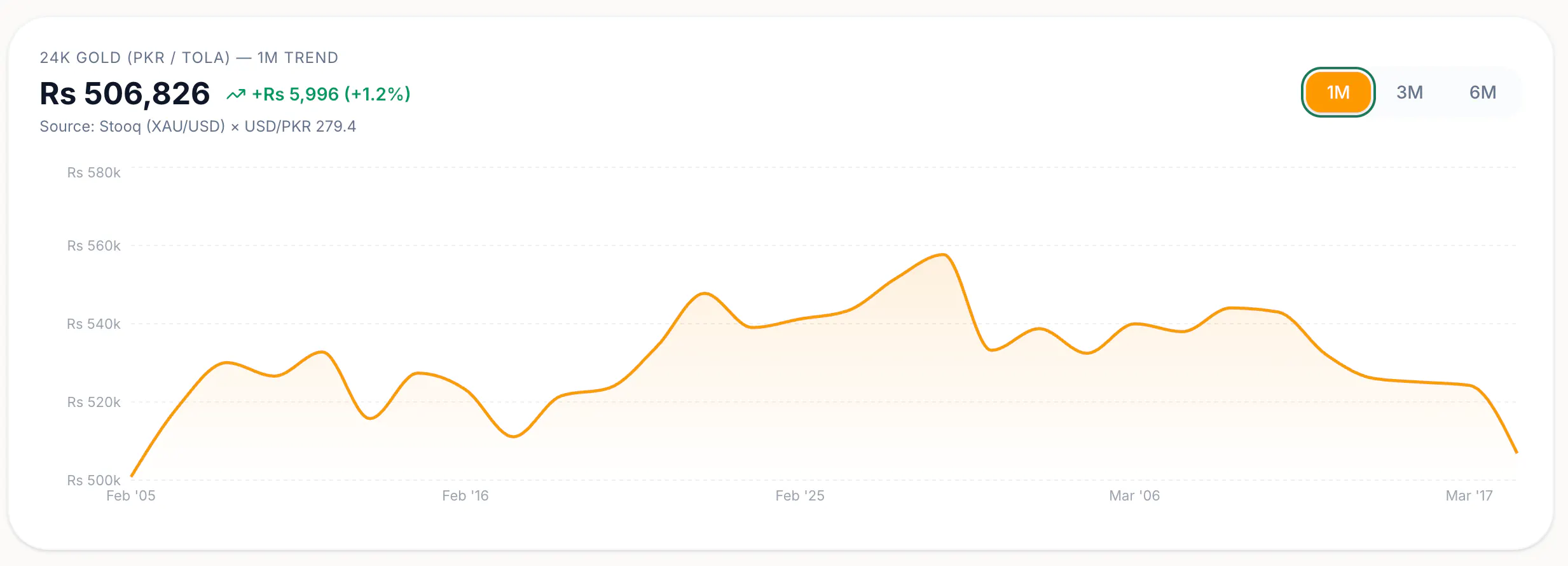
For many Pakistanis, gold is not just an ornament; it is a financial buffer, a store of value, and a traditional hedge against inflation. This is why the sharp dip in gold prices over the last week has been a major point of discussion in markets from Karachi to Islamabad. After reaching historic highs and testing the Rs 540,000 per tola mark just a few weeks ago, the price of 24K gold has dropped, causing uncertainty for both investors and those planning personal purchases.
- Let's break down the complex web of global factors, regional politics, and market mechanics that have caused this significant correction.
Understanding the Drop: The 'Perfect Storm' in the Gold Market
- The sharp correction in local prices is not random. It is the result of multiple powerful forces converging simultaneously in the global financial market. If you are tracking this trend, here are the key reasons behind the decline:
1. Global Warfare and the 'Liquidity Paradox'
- Historically, wars and geopolitical crises (like the current tensions in the Middle East involving Iran, Israel, and the Strait of Hormuz) push gold higher as it's considered a safe-haven asset. However, we are witnessing a paradox. This intense conflict has spiked volatility in oil and other sectors. When these other sectors crash, large hedge funds often sell their gold holdings to cover their losses or meet margin calls elsewhere in their portfolios. Because gold is highly liquid (easy to sell), it becomes the 'ATM' during a panic.
- Furthermore, these conflicts have pushed energy costs and global inflation expectations even higher. This seemingly bizarre sequence brings us to the next critical factor.
2. The US Federal Reserve's 'Hawkish Hold'
- This is perhaps the biggest driver of the recent drop. Global gold is priced in US Dollars. On March 18, 2026, the US Federal Reserve (the Fed) decided to keep its baseline interest rate high (3.5%-3.75%). Far more importantly, they significantly reduced their forecast for future rate cuts, signaling just one cut for the rest of the year, whereas the market was hoping for three.
- Higher interest rates for a longer period do two things that damage gold prices:
- Strong Dollar: They attract global capital to US Treasury bonds, making the US Dollar much stronger. When the Dollar is expensive, gold (priced in Dollars) becomes too expensive for buyers using other currencies (like the Euro, Yuan, or Pakistani Rupee), crushing global demand.
- Non-Yielding Asset: Gold pays no interest or dividends. In a high-rate environment, holding cash in a bank that yields 4% or 5% is more attractive to many large investors than holding physical gold.
3. Regional Politics and Supply-Chain Disruptions
- Local dynamics in major hubs are also playing a crucial role. We have seen reports of major logistical disruptions in Dubai, a primary entry point for Pakistan's physical gold trade. Due to geopolitical flight restrictions and new export regulations, a large volume of gold was essentially 'trapped' in regional vault systems. To raise cash and avoid long-term storage costs, many regional traders have had to dump physical supply onto the market at a significant discount, creating sudden, localized downwards pressure.
The Numbers: How Deep is the Dip?
- The shift in the last two weeks has been dramatic for a commodity that usually moves by percentage points, not huge leaps.
What is the Outlook for Pakistan Investors?
- The immediate outlook is complex. While gold prices have fallen below the psychologically important Rs 500,000 per tola level, many analysts are not treating this as the end of the long-term bullish trend. The core reasons people buy gold—continued inflationary pressure within Pakistan, central bank buying globally, and structural debt issues in Western economies—remain largely unchanged.
- Current Perspective:
- Bullish Case: If the geopolitical situation escalates further, or if the US economy shows signs of a recession forcing the Fed to cut rates sharply, gold could see a massive 'rebound' wave, potentially surpassing Rs 600,000 as a long-term target.
- Bearish Case: In the short term, gold faces significant headwinds from a resolute Federal Reserve. We might see further consolidation near these levels.
The Takeaway: Avoid Panic, Think Long-Term
- For an average Pakistani investor, this volatility is a critical lesson:
- Never Panic-Sell: This price drop is not unique to Pakistan; it's a global macro event.
- Focus on the Long-Term: Gold's power as a hedge works over years, not weeks.
- Diversification is Key: This highlights why your entire portfolio should not be in a single asset.
- The correction below Rs 500,000 is a significant development, but in a world defined by geopolitical chaos and persistent inflation, the fundamental value of gold is far from gone. If you were waiting to buy for a wedding or long-term savings, this may be an entry window, but proceed with caution and keep your portfolio balanced.