The Panda Pivot: Pakistan’s $1 Billion Leap into Chinese Capital Markets
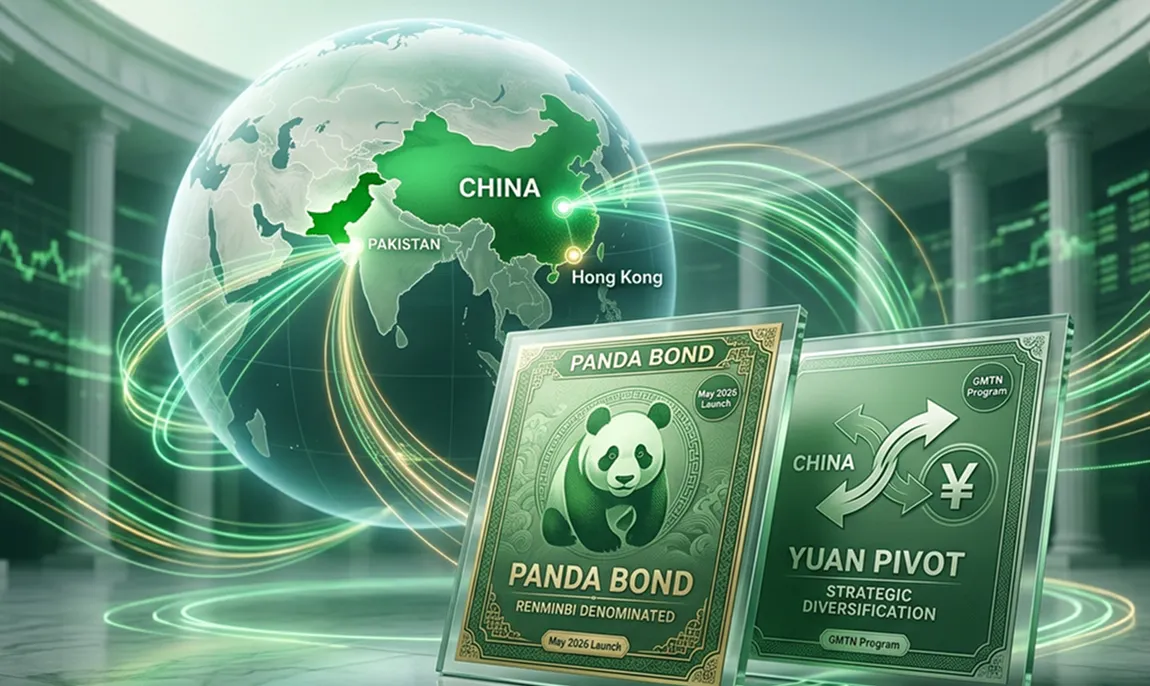
While the world watches the IMF, a historic shift is happening in the East. Finance Minister Muhammad Aurangzeb, speaking from the sidelines of the IMF-World Bank Spring Meetings in Washington (April 16, 2026), has confirmed that Pakistan is at the "advanced stage" of launching its first-ever Panda Bond.
This isn't just another loan; it’s a strategic "Yuan Pivot" that moves Pakistan away from its heavy reliance on the US Dollar and opens a direct line to the world’s third-largest bond market.
1. The "May Launch" Timeline
After several delays for technical prep, the Minister has set a firm target: May 2026.
- Initial Size: $250 Million (denominated in Renminbi/Yuan).
- Total Program: Part of a broader $1 Billion borrowing plan from the Chinese interbank market.
- The "Triple-A" Safety Net: To ensure investor confidence, the Asian Development Bank (ADB) and the Asian Infrastructure Investment Bank (AIIB) are providing credit enhancements and counter-indemnity guarantees. This effectively "de-risks" the bond for Chinese investors.
2. Why the "Yuan Pivot" Matters for the Masses
For the average person, "Panda Bonds" sound like high-level macroeconomics. But the "hidden" impact on your wallet is significant:
- Dollar Pressure Relief: By borrowing in Yuan (RMB), the government reduces the desperate hunt for Dollars to pay off debts. This helps stabilize the PKR/USD exchange rate.
- The "Green" Angle: A significant portion of these bonds is labeled as "Green Panda Bonds," specifically earmarked for sustainable energy and climate-resilient projects. This means more investment in renewable energy, which is the only long-term way to bring down your electricity bills.
- Diversification: Just as you shouldn't keep all your savings in one bank, a country shouldn't owe all its debt in one currency. This pivot makes Pakistan’s economy more resilient to US Federal Reserve interest rate hikes.
The Finance Minister also revealed the launch of the Global Medium-Term Note (GMTN) program. * The Play: Pakistan is re-entering international markets after a 4-year gap.
- The Menu: Along with Panda Bonds, the government is looking at "Dollar-Settled, Rupee-Linked Bonds." * The Goal: To compress Pakistan's "yield curve"—basically making it cheaper for the country (and eventually for you and local businesses) to borrow money.
The Bottom Line: We are trading "Dollars for Dragons." By the end of May, the Yuan will no longer just be a currency for trade; it will be a cornerstone of Pakistan’s national debt profile.
Is the Panda Bond a brilliant diversification or a deeper debt trap?