The Great Pivot: From Software Houses to Product Studios
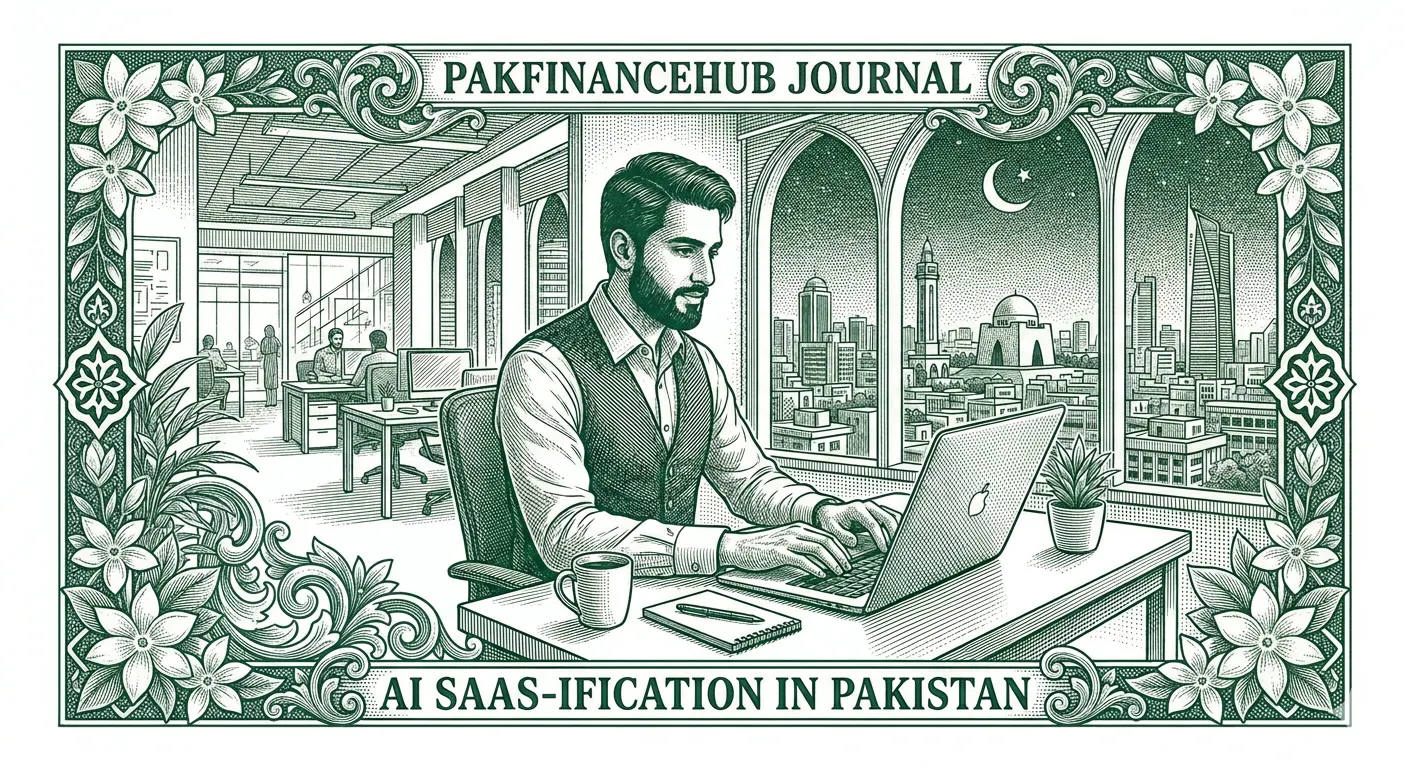
The shift you’re noticing isn’t just hype—it’s a fundamental structural pivot. For years, Pakistan’s tech scene was the "back office" of the world, a service-based powerhouse built on team augmentation and hourly rates. But as we hit mid-April 2026, the vibe at GITEX Africa and FutureNet World confirms one thing: Pakistan is moving from "Hours for Dollars" to "Products for Equity."
Here is the deep dive into the AI "SaaS-ification" of our local tech landscape.
The traditional software house model is under siege. In 2026, a "wrapper" around an LLM isn't a product; it’s a feature. The local community has realized that to survive the AI wave, they must build Vertical SaaS—tools that solve hyper-specific problems for specific industries.
The Death of the "Generalist" Freelancer: According to recent data from Freelancer Kompass 2026, nearly 84% of freelancers now use AI as core infrastructure. The ones winning are those who have stopped selling "coding" and started selling "automated workflows."
The Rise of Micro-SaaS: We are seeing a surge in Pakistani devs launching Micro-SaaS tools on platforms like the Figma Community or Replit. These aren't massive ERPs; they are laser-focused agents that handle DNS management, AdSense SEO audits, or automated financial reporting.
Insights from the Global Stage
GITEX Africa: The "Tech Destination Pakistan" Push
At GITEX Africa this month, the "Tech Destination Pakistan" pavilion (supported by P@SHA and the Ministry of IT) isn't just showcasing talent; it’s showcasing IP (Intellectual Property).
The Narrative: We aren't just "cheaper" anymore. Pakistani startups are presenting AI-native solutions for agriculture and healthcare that are 70% more cost-effective to run than North American counterparts but built on the same cutting-edge agentic workflows.
Foresight: By the end of 2026, IT exports are projected to hit $5 Billion, driven largely by these scalable product models rather than just headcount.
FutureNet World: Autonomous Operations
Over in London, the talk at FutureNet World 2026 is all about Network Automation. For the Pakistani telco and tech stack, this means a shift toward "Autonomous Networks."
Our local devs are building the AI layers that monitor security logs and execute initial response protocols in milliseconds. It’s no longer about "fixing the bug"; it's about the AI predicting the bug before the user even sees it.
The Local Impact: What This Means for You
If you are a designer, developer, or consultant in Pakistan right now, the strategy is clear: Productize or Perish.
Stop Selling Services, Start Selling Solutions: Instead of "I will design your UI," the 2026 pitch is "I will implement an AI-driven design system that reduces your front-end dev time by 40%."
Focus on "The Why": AI can generate the "What" (the code, the pixels). Humans are now responsible for the Strategy and Synthesis. This is where the real money is.
The "SaaS-ification" of Personal Brands: Experts are turning their knowledge into "digital assets." Whether it's a Video on Demand SaaS framework or a suite of financial calculators, your value is now tied to your Scalable IP.
The Bottom Line
Pakistan's tech ecosystem is shedding its "outsourcing" skin. We are entering an era where a developer in Faisalabad or a designer in Karachi isn't just a "resource" in a Jira ticket—they are the Architect of an AI Agent that runs 24/7 globally.
The buzz at GITEX and FutureNet isn't just about new gadgets; it's a coronation of Pakistan as a Global Product Hub.