The Rial Rush: Understanding the Risks and Rewards for the Pakistani Market.
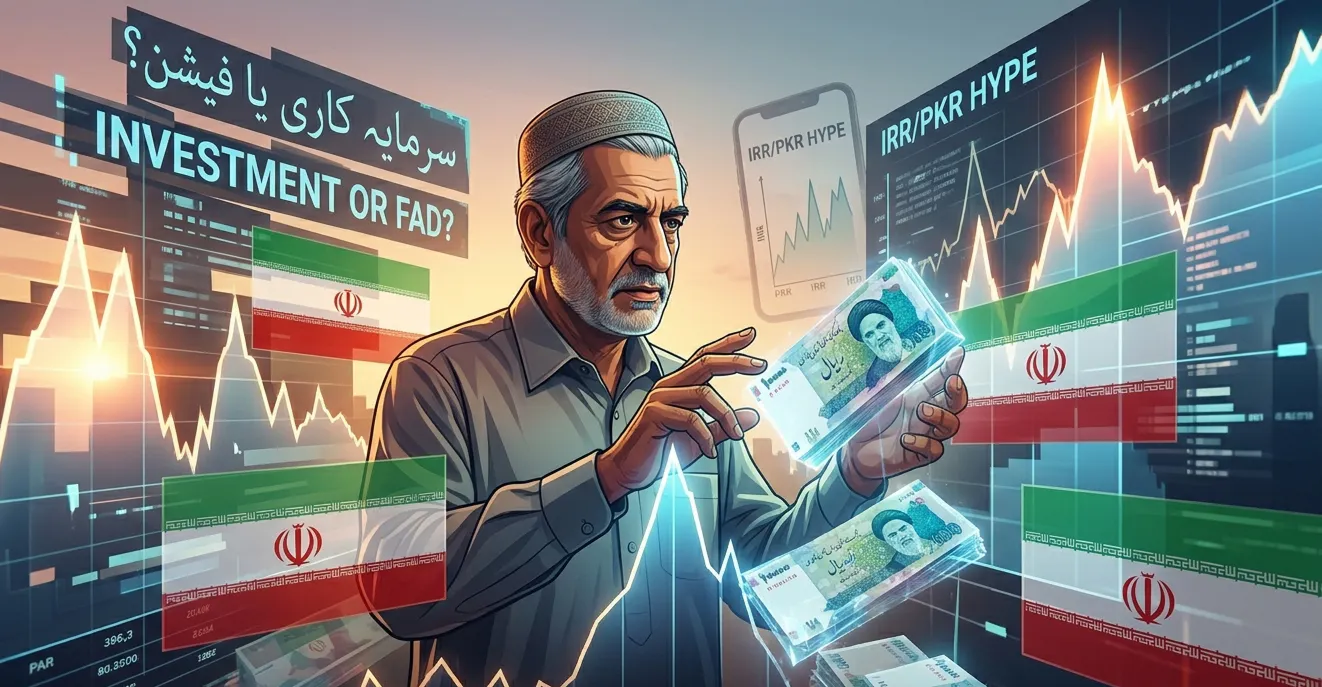
In recent months, a "Rial Fever" has gripped currency markets in Karachi and Lahore. Rumors of the Iranian Rial (IRR) potentially "skyrocketing" have turned it into a hot topic at dinner tables and on social media. But for Pakistani investors, the line between a strategic move and a speculative trap is dangerously thin.
1. The Current Trend: Why the Hype?
As of April 2026, the demand for Iranian Rials in Pakistan’s open market has surged. Before the recent regional conflicts, 10 million Rials could be bought for roughly Rs. 2,500. Today, that same amount is trading as high as Rs. 10,000.
- Speculative Buying: Many investors are buying "crores" of Rial for a few thousand rupees, hoping that if Iran’s economy stabilizes or sanctions are lifted, their small investment will turn into millions.
- Cross-Border Trade: Increased trade in petroleum and other goods through Balochistan has increased the physical circulation of the currency, making it more accessible to the average person.
2. The "Four Zero" Reality Check
The most significant factor often misunderstood by speculative buyers is Iran's Currency Redenomination. The Central Bank of Iran has begun the process of removing four zeros from the Rial.
The Trap: Many people believe that 10,000 Rials will suddenly become worth the value of a "strong" currency. In reality, the government is simply shrinking the numbers to make accounting easier. If you hold 10,000,000 old Rials, you will eventually just hold 1,000 new Rials. Your purchasing power remains the same.
3. Investment vs. Fad: The Risks
Is it a good investment? Most financial experts, including the Exchange Companies Association of Pakistan (ECAP), categorize this as a high-stakes gamble rather than an investment.
The Arguments for "Fad":
- Hyperinflation: Iran’s inflation has recently hovered around 55%. When a country prints money this fast, the currency naturally loses value against the Dollar and the Rupee.
- Sanctions & Liquidity: Because of international sanctions, it is incredibly difficult to trade Rials in formal banking channels. You are stuck with physical cash that may be hard to sell back if the "hype" dies down.
- The "Iraqi Dinar" Precedent: Years ago, many Pakistanis bought Iraqi Dinars hoping for a revaluation that never came. Most of those investors are still holding worthless paper today.
The Arguments for "Opportunity":
- Geopolitical Shifts: If a permanent ceasefire is reached and sanctions are eased, the Rial could see a legitimate recovery.
- Oil Wealth: Iran remains an oil-rich nation. A stabilized economy could, in theory, support a stronger currency over a 10–12 year horizon.
Final Verdict for Pakistanis
Buying Iranian Rial today is speculative trading, not a stable investment.
If you have a very high risk appetite and are using "pocket change" that you are prepared to lose, you might see it as a lottery ticket. However, for those looking to preserve their wealth or save for the future, traditional assets like gold, silver, or fractional real estate remain far more reliable. The current surge in Rial prices in Pakistan is largely driven by local demand and hype, which can crash as quickly as it rose.
Why Iranian Rial is Surging in the Forex Market
This report provides a global perspective on why the Rial's value has fluctuated so wildly in the open market and the specific economic pressures currently affecting it.